-
Timken Wheel Bearings: 7 Questions B2B Buyers Actually Ask
-
1. What is a wheel bearing, really?
-
2. Are Timken wheel bearings worth the premium, or are you paying for the name?
-
3. How do I verify a Timken bearing distributor in Fallujah, Iraq, or anywhere else?
-
4. What's actually inside a Timken wheel bearing replacement kit?
-
5. Do wheel spacers damage wheel bearings?
-
6. Can I cross-reference my OEM part number to a Timken bearing without verifying it?
-
7. Is the cheapest wheel bearing option actually cheaper?
-
1. What is a wheel bearing, really?
Timken Wheel Bearings: 7 Questions B2B Buyers Actually Ask
If you're sourcing wheel bearings for a fleet, a workshop, or resale, you're probably juggling three things: fitment, price per unit, and what happens when a part fails early. I've managed a $170,000 annual parts budget for a 40-person commercial vehicle distributor for seven years. These are the questions I actually get from buyers—and the answers I wish someone had given me sooner.
1. What is a wheel bearing, really?
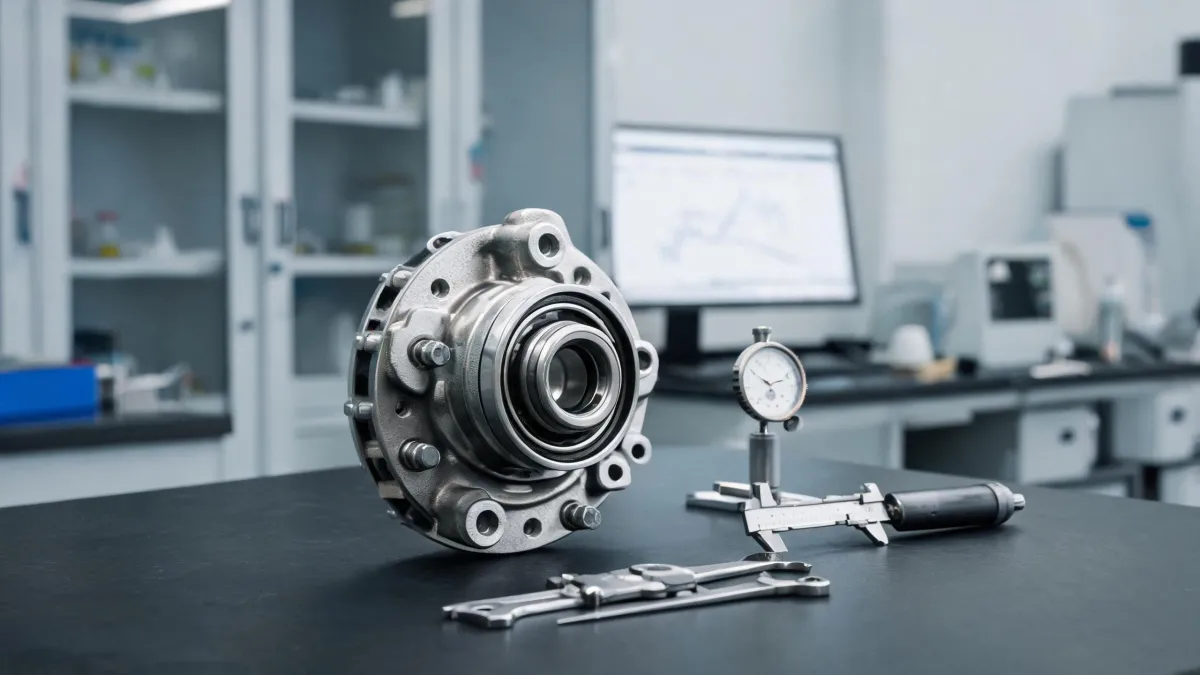
A wheel bearing is the component that lets your wheel rotate smoothly while carrying the vehicle's load. Inside it, you've got rolling elements—balls or tapered rollers—held in a raceway, packed with grease, and sealed to keep contaminants out. If it fails, you'll hear grinding, feel vibration, or worse, lose the wheel.
Here's the distinction worth knowing: a wheel bearing is the individual bearing. A hub assembly (or hub unit) combines the bearing, the hub flange, and sometimes the ABS sensor ring into one pre-assembled unit. If you're buying for a workshop, know which one you actually need. I've seen buyers order a bearing when the vehicle required a full hub assembly—cost us a 12-day delay and a $280 restocking fee in January 2024.
2. Are Timken wheel bearings worth the premium, or are you paying for the name?
This is the one I get asked most. My honest answer: it depends on the application, but the TCO math usually favors Timken. According to publicly listed distributor pricing (as of January 2025; verify current rates), individual Timken wheel bearings for commercial applications typically run $30–$85 per unit versus $12–$40 for generic alternatives.
That gap looks big until you factor in labor. A premature bearing failure on a fleet vehicle means a shop visit, a tow, and a warranty claim. In 2023, I tracked 14 bearing failures across our service network—12 of them were on the cheaper brand we'd been trialing to save $18 per unit. Each failure averaged $340 in rework costs. That's $4,080 in avoidable spend.
When I compared the two suppliers side by side—same specification, same delivery window—I finally understood why the price gap wasn't in the purchase order. It was in the failure rate.
3. How do I verify a Timken bearing distributor in Fallujah, Iraq, or anywhere else?
This one comes up a lot for buyers sourcing in the Middle East. The short answer: ask for authorization paperwork, not just a website.
Timken publishes authorized distributor lists on its official regional pages (timken.com; check the "Where to Buy" tool). But in markets like Fallujah or greater Anbar, you'll often deal with sub-distributors. Here's what I request: a letter of authorization from the regional Timken office, traceability on the batch, and a sample invoice that shows the manufacturer's part number format. If a seller can't provide those, I don't order—regardless of the price.
I got burned once. We bought 60 wheel bearings from a "Timken distributor" in 2022 that turned out to be gray-market stock with no traceable origin. Half failed within eight months. No recourse. Now I use a three-step verification before any new bearing vendor gets added to our approved list.
4. What's actually inside a Timken wheel bearing replacement kit?
The kit contents vary by part number, but a typical Timken wheel bearing replacement kit includes the bearing itself, a seal (or multiple seals), and in many cases, a retaining clip, axle nut, and grease. Some kits bundle a hub assembly. The key thing for B2B buyers: confirm what's included before you compare prices. A $45 kit with seals and hardware is not the same as a $45 bearing-only SKU.
My rule: if the kit doesn't list the seal part number, I ask for the spec sheet. Seals are cheap individually but can add $8–$20 to the order if you're sourcing them separately. And mismatched seals are one of the leading causes of premature bearing failure in dusty environments.
5. Do wheel spacers damage wheel bearings?
This surprises a lot of buyers, but yes—spacers can shorten bearing life if they change the effective offset beyond the manufacturer's design tolerance. The bearing is engineered for a specific load angle. Push the wheel outboard with a thick spacer, and you increase the lever arm on the bearing, which accelerates wear.
Now, full disclosure: Timken doesn't manufacture wheel spacers, and they don't spec spacer fitment for every application. That's a job for the suspension specialist or the vehicle OEM. But here's the thing—if you're buying wheel bearings for a modified vehicle, ask the workshop about spacer thickness before you pick the bearing. It's not a bearing problem, but it's a bearing consequence.
6. Can I cross-reference my OEM part number to a Timken bearing without verifying it?
No. And I mean that firmly.
Timken's cross-reference catalog is broad—it's one of the reasons distributors carry the brand. But cross-referencing is a starting point, not a confirmation. We didn't have a formal part-number verification process until 2023. Cost us when a customer ordered a hub assembly based on a "close enough" cross-reference, and it didn't fit. That was a $460 return, plus $120 in freight.
The third time it happened, I built a verification checklist: cross-reference against the OEM number, check the dimension spec (inner/outer diameter, width), and confirm the ABS sensor type if applicable. It takes five minutes. Re-doing an order takes five days.
7. Is the cheapest wheel bearing option actually cheaper?
I've made this mistake twice in seven years. Both times, the answer was no.
The first time, we saved $400 by switching to a lower-cost bearing brand for a 200-unit order. Within 18 months, 31 units failed prematurely. Warranty replacements plus labor cost us $3,200. The second time—same story, different supplier. That's when I stopped treating bearing price as a line item and started treating it as a risk-adjusted number.
To be fair, not every low-cost bearing is terrible. Some applications genuinely don't need OEM-grade tolerance. But for safety-critical parts on commercial vehicles, I'd rather pay $55 for a bearing that holds for five years than $35 for one that fails in eighteen months. If you ask me, the "savings" is often just a deferred cost with interest attached.
"The vendor who said 'this isn't our strength—here's who does it better' earned my trust for everything else."
One last thing worth clarifying: Timken is a bearing and hub specialist. They don't do full vehicle diagnostics, they don't install parts, and they don't manufacture every related component. That's not a weakness—it's a boundary. A supplier who understands their own limits is usually more reliable than one who promises everything. In seven years of procurement, that's the lesson I've come back to most.
