Why this comparison matters
Since I took over procurement in 2020, I've managed roughly $180k in annual spending across 8 vendors for a 60-person company. Wheel bearings, seals, retaining clips, tractor tires—these aren't glamorous purchases, but getting them wrong has cost me real money and real time.
I'm not a mechanic. I'm the person who makes sure the right parts arrive with the right paperwork so the people who know what they're doing can do it. That perspective shapes how I compare suppliers—it's less about what the part looks like and more about what happens when it arrives wrong.
When I first started comparing Timken wheel bearings against generic alternatives, I made the mistake most buyers make: I looked at the price tag and stopped there. That lasted about six months. Then I had a failure that changed how I evaluate every bearing order. Here's the framework I use now—reliability, source verification, and specification accuracy. Three dimensions, each with a clear practical impact on what you actually pay, not just at checkout but over the life of the part.
Dimension 1: OEM-grade reliability vs. "it should work"
The Timken Company's bearings are engineered to OEM tolerances. That's not a tagline—it's why their wheel bearings show up as factory equipment on commercial vehicles. When I order Timken wheel bearings, I'm buying a known spec, not a hope.
Generic alternatives are a mixed bag. Some are fine. What I mean is: a few meet OEM tolerances, but I can't tell which ones without testing them myself—and I don't have time for that. I don't have hard data on industry-wide failure rates, but based on our fleet's three years of records, we've had two premature failures on generic bearings and zero on Timken sets. That's not a scientific sample, but it's enough to shape how I buy.
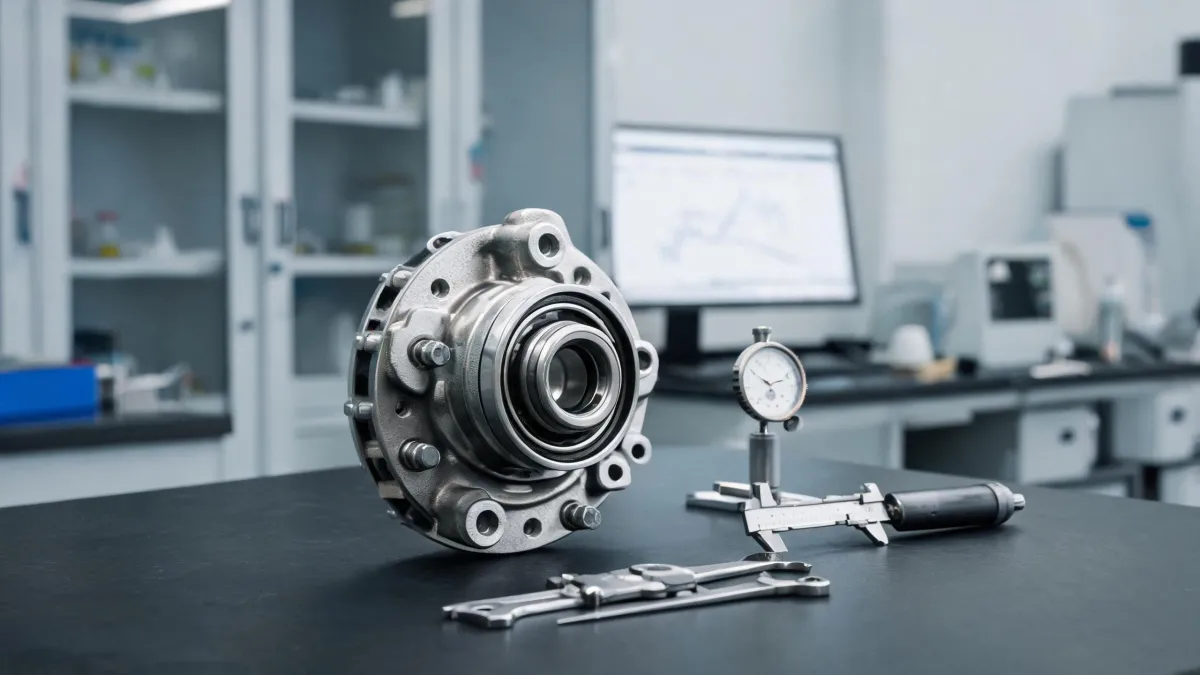
Bearings look similar in a photo. In practice, the differences show up under load: raceway finish, cage material, grease type, seal design. Timken publishes these details. Generic suppliers usually don't—or can't, because their specs vary batch to batch.
"Everyone told me to verify OEM specs before substituting. I only believed it after skipping that step once and eating an $800 mistake on a bearing that 'matched' but didn't last."
Here's the surprise: the price gap is narrower than I expected. A standard Timken wheel bearing assembly runs 20-35% more than the cheapest generic option. Over a 12-18 month replacement cycle, that premium generally pays for itself. That said, if you're running light-duty equipment with infrequent use, the math can look different.
Dimension 2: Authorized distributor vs. open market
This is where the difference gets practical. It's not about the bearing itself—it's about what comes with it.
Through an authorized distributor, you get traceability. The part number matches the catalog, the invoice is clean, and there's a warranty path. When a colleague needed supply options for a project near Fallujah, Iraq, I checked whether an authorized Timken bearing distributor operated there. They did—same catalog, same documentation standards. Authorized distribution isn't limited to major cities.
One more thing on documentation: I've had finance reject an invoice because the supplier wrote "bearing assembly" instead of the actual part number. Authorized distributors don't make that mistake. Their invoices match the catalog line by line, which means I don't spend Friday afternoon chasing purchase-order reconciliation.
The open market is different. I've bought bearings from general parts suppliers when I needed something fast. Cheaper, yes. But I've also had a supplier send a "Timken equivalent" that had the right outer diameter and the wrong seal design. Finance flagged the part number mismatch. I ate the cost of the return shipping and a delayed install.
Had 48 hours to get a bearing for a truck scheduled to leave Monday. Normally I'd verify through the authorized channel, but there was no time. Went with a local open-market supplier based on a phone confirmation. The bearing fit, but I checked it for play every time the truck returned for two weeks. In hindsight, I should have pushed the schedule back a day.
Dimension 3: Verified specs vs. verbal confirmation
This is the dimension I overlooked for the longest time—and the one that matters most for efficiency.
Timken publishes a comprehensive wheel bearing seal size chart and cross-reference catalog. I keep a printed copy at my desk. Before I place an order, I verify the seal dimensions, bearing bore, and outer diameter. That eliminates the "I think this is the right one" phase entirely.
The cross-reference tool is the part I'd recommend to anyone new to this. You type in a competitor part number or an OEM reference, and it returns the Timken equivalent with specs. No phone call, no waiting for a callback. That alone changed how I handle urgent requests.
With generic suppliers, you're often working off verbal confirmation: "Yeah, this fits the model you mentioned." That's not good enough when a $12 seal failing means a $400 hub replacement.
When I compared two quotes side by side last month—one from an authorized distributor with full spec sheets, one from an open-market supplier with just a price—I finally understood why the authorized process felt slower but actually saved time. The open-market quote required three phone calls and still ended in a part-number lookup I couldn't complete with confidence. The authorized quote had everything attached.
The same logic applies to other parts. You wouldn't order tractor tires without checking the size chart, and you wouldn't order wheel locks without confirming the thread pattern and key type. When a new hire asked me what are wheel locks and why the key code matters, I realized it's the same lesson: small parts aren't simple if you don't verify the specs.
How I decide now
Choose Timken through an authorized distributor when the bearing goes on a vehicle or machine that runs daily, carries loads, or can't afford downtime. The 20-35% premium is insurance against a failure that costs 10x more to fix.
Consider generic alternatives through open-market suppliers when the application is light-duty and non-safety-critical—but only if you can verify the specifications yourself. If you can't confirm the seal size and part number match, don't order.
What I'd push back on is the idea that "a bearing is a bearing." It's not. Manufacturing tolerances, seal materials, and quality control vary widely. The Timken catalog and cross-reference tools exist precisely because fitment is specification, not guesswork.
The efficiency angle matters here. A five-minute check using a seal size chart has saved me more time than any fast-shipping upgrade. Ordering the wrong part once costs more than ordering the right part ten times. At least, that's been my experience across the last four years of fleet parts procurement.
